Root canals have one of the worst reputations in dentistry, and almost none of it is deserved. For most patients, the procedure is far more comfortable than the toothache that led them there in the first place. With a success rate between 85% and 97%, root canal treatment is one of the most reliable and effective procedures in modern dentistry. If your dentist has mentioned you may need one, or if you have been putting off a painful tooth hoping it will resolve on its own, this guide is for you.
What Is a Root Canal
A root canal is a procedure that treats infection inside a tooth, specifically in the soft inner tissue known as the pulp. Rather than removing the tooth entirely, root canal treatment saves it by cleaning out the infection, relieving the pain, and sealing the tooth so the problem cannot return.
What Happens Inside an Infected Tooth
Each tooth contains a chamber of soft tissue called the pulp, which houses nerves and blood vessels. When bacteria enter the tooth through a crack, a deep cavity, or a damaged filling, the pulp becomes infected. That infection causes the intense, throbbing pain that many people associate with a tooth problem. Left untreated, the bacteria continue to multiply, and the infection spreads beyond the tooth into the surrounding bone and tissue, creating a much more serious situation than a simple toothache.
What Root Canal Treatment Actually Does
During a root canal, your dentist removes the infected pulp, thoroughly cleans and shapes the inner canals of the tooth, and then seals them with a biocompatible material to prevent reinfection. The tooth itself remains in place, intact and functional. Most patients need one to two appointments to complete the process, and many are surprised by how straightforward the experience actually is.
Signs You May Need a Root Canal
Catching the signs early gives you the best chance of saving the tooth with minimal complications. Here are the most common indicators that something is going on inside the tooth that needs professional attention.
Persistent Tooth Pain
Pain that lingers, throbs, or worsens when you bite down is one of the clearest signs of a pulp infection. Unlike sensitivity that comes and goes, this kind of discomfort tends to be consistent and does not improve with over-the-counter pain relief. If you have been managing a toothache for more than a few days, it is time to get it evaluated.
Sensitivity to Heat and Cold
Everyone experiences some degree of tooth sensitivity from time to time, but sensitivity that lingers long after the hot or cold stimulus is removed is a different matter. When the nerve inside a tooth is damaged or infected, temperature changes can trigger sharp, lasting pain that signals something deeper is going on.
Swollen or Tender Gums
When the pulp of a tooth becomes infected, the surrounding gum tissue often responds with inflammation. You may notice swelling, tenderness, or a raised area near the affected tooth. This is your body’s attempt to fight off the infection, and it is a clear sign that the problem has progressed beyond the tooth itself.
Darkening or Discoloration of the Tooth
A tooth that begins to darken or take on a grayish tone is often signaling internal damage. This discoloration can result from trauma that caused internal bleeding inside the tooth or from an infection that has been developing quietly over time. Discoloration alone is worth a professional evaluation, especially when it appears in a tooth that has previously had trauma or a large filling.
A Pimple on the Gums
A small bump on the gum near a painful tooth is called a dental fistula, and it is essentially a pressure valve that forms when an abscess needs to drain. It may come and go, and it might even seem to relieve some of the pain temporarily. Do not let that fool you. A fistula is a sign of active infection and requires treatment right away.
What Does a Root Canal Actually Feel Like
During the Procedure
The short answer is that it feels like very little, thanks to local anesthesia. Once the area is fully numb, your dentist creates a small opening in the top of the tooth to access the infected pulp. Specialized instruments are used to clean and shape the canals, removing all infected tissue. You may hear sounds from the dental instruments and feel some pressure, but pain during a modern root canal is genuinely uncommon. Most patients are relieved to discover how manageable the experience is compared to what they anticipated.
After the Procedure
Mild soreness in the treated area for the first day or two is normal as the tissue around the tooth settles. This is easily managed with over-the-counter pain relievers and typically resolves on its own within a few days. By day three, most patients notice a significant improvement in how they feel. You will be asked to avoid chewing on the treated tooth until your final restoration is placed, which is usually a crown.
How Sedation Options Make It More Comfortable
For patients who experience dental anxiety, sedation options are available to make the experience even more relaxed. Nitrous oxide and oral sedation are commonly used to take the edge off, allowing you to remain calm and comfortable throughout the procedure. Many anxious patients describe the experience as passing by quickly when sedation is involved, making a once-dreaded appointment feel far more manageable.
Why You Should Not Wait to Get a Root Canal
How a Tooth Infection Can Spread
A tooth infection does not stay contained to one spot. Without treatment, bacteria can spread to adjacent teeth, into the jawbone, and in more serious cases, into the sinuses or the bloodstream. What starts as an infected tooth can become a systemic health issue if ignored long enough. This is not meant to cause alarm, but to make clear that a tooth infection is not something to manage with pain relievers and hope.
Risking the Loss of Your Natural Tooth
The longer an infection is left untreated, the more damage it causes to the tooth structure and the surrounding bone. At a certain point, the tooth becomes too compromised to save, and extraction becomes the only option. A root canal performed early avoids that outcome entirely, preserving your natural tooth and everything it does for your bite, your bone, and your smile.
The Longer You Wait, the More Complicated It Gets
Beyond the risk of losing the tooth, delaying treatment almost always means the eventual procedure is more involved. Infections that have had time to spread require more extensive treatment, longer recovery, and potentially additional procedures. Addressing the problem at the first sign of trouble keeps things straightforward and manageable.
Root Canal vs. Tooth Extraction: Which Is Better
Why Saving Your Natural Tooth Always Comes First
Your natural teeth are irreplaceable in the truest sense. They preserve the bone structure of your jaw, support surrounding teeth, and function better than any restoration. Extracting a tooth also creates a gap that needs to be filled, usually with an implant or bridge, which involves additional time, procedures, and cost. A root canal that saves your natural tooth is almost always the preferred outcome, both clinically and financially.
When Extraction Becomes Necessary
There are situations where a tooth is simply too compromised to save. Severe fractures that extend below the gum line, extensive bone loss around the tooth, or infections that do not respond to root canal therapy may all lead to extraction being the better path forward. Your dentist will always assess your specific situation and recommend the option that best protects your long-term oral health.
What Happens After a Root Canal
Do You Always Need a Crown After a Root Canal
In most cases, yes. A tooth that has undergone root canal treatment has had its inner tissue removed, which can make it more brittle over time. A crown placed over the treated tooth protects it from fracturing under normal chewing pressure and restores its full function and appearance. Back teeth that absorb the majority of chewing forces almost always need a crown. Front teeth may not always require one, depending on how much of the natural tooth structure remains.
Recovery Timeline and What to Expect
The first 24 hours may involve mild soreness, which resolves quickly with over-the-counter pain relief. By days two and three, discomfort decreases noticeably. Within one to two weeks, you will return for your permanent crown placement, completing the restoration. Following your dentist’s aftercare instructions, maintaining gentle oral hygiene, and avoiding chewing on the treated tooth until it is fully restored are the main things that support a smooth recovery.
Root Canal Myths vs. Reality
Myth: Root Canals Are Extremely Painful
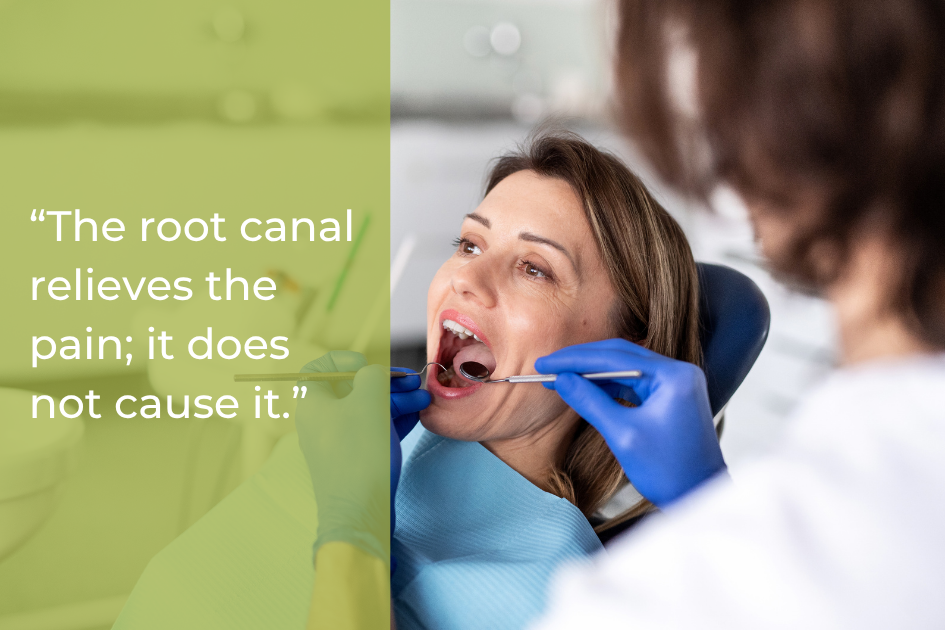
This myth likely comes from a time before modern anesthesia and dental technology made the procedure as comfortable as it is today. The reality is that most patients feel little to nothing during the procedure, and the mild soreness afterward is far less intense than the toothache that brought them in. The root canal relieves the pain; it does not cause it.
Myth: It Is Better to Just Pull the Tooth
Extraction may seem simpler, but losing a natural tooth sets off a chain of consequences that many patients do not anticipate. Surrounding teeth shift, bone in the jaw begins to deteriorate, and the gap typically needs to be replaced with an implant or bridge. A root canal that preserves your natural tooth avoids all of that, and with a success rate of up to 97%, it is an investment that pays off.
Myth: Root Canals Cause Illness
This claim has been thoroughly examined and consistently disproven by modern research. It originated from a flawed study conducted over a century ago and has no scientific support today. Root canal treatment removes the source of infection rather than creating one, and it is considered a safe, evidence-based procedure by every major dental and medical organization.
What to Expect During Your Root Canal at Park Family Dental

Your Examination and Diagnosis
Your visit begins with a thorough examination that may include digital X-rays or a Cone Beam CT scan for precise imaging of the affected tooth and surrounding bone. Dr. Ardita Ormeni will review your symptoms, assess the extent of the infection, and confirm whether a root canal is the right course of treatment before any procedure begins.
The Treatment Process Step by Step
Once you are comfortably numb, Dr. Ormeni creates a small access opening in the top of the tooth. Specialized instruments are used to carefully clean and shape each canal, removing all infected pulp tissue. The canals are then flushed, shaped, and sealed with a biocompatible material called gutta-percha to prevent bacteria from re-entering. A temporary filling is placed to protect the tooth until your crown appointment.
Aftercare and Follow-Up
After your procedure, you will receive clear aftercare instructions to support your recovery. Stick to soft foods for the first day or two, avoid putting pressure on the treated tooth, take any prescribed medications as directed, and maintain a gentle brushing and flossing routine. Your follow-up appointment for the permanent crown is an important step in completing the restoration, so do not skip it.
Why Cedar Park Patients Trust Park Family Dental for Root Canal Treatment
Park Family Dental uses advanced diagnostic technology, including Cone Beam CT imaging and digital X-rays, to accurately identify the extent of an infection before treatment begins. Electronic apex locators are used during the procedure to take precise measurements inside the canals, making the process more efficient and accurate. Dr. Ardita Ormeni and the team prioritize patient comfort at every step, from effective local anesthesia to sedation options for patients who need extra reassurance. The result is a root canal experience that feels nothing like the one most people have been dreading.
Do Not Wait Until the Pain Gets Worse
Tooth pain is your body telling you something is wrong, and a dental infection will not resolve on its own. The earlier you seek treatment, the simpler the procedure, the faster the recovery, and the better the outcome for your tooth and your overall health. If you have been experiencing any of the signs described in this post, schedule a consultation at Park Family Dental in Cedar Park today. Your tooth and your comfort are worth protecting.