Dental crowns and bridges are both trusted solutions in restorative dentistry, but they serve very different purposes. A crown protects and rebuilds a single tooth, while a bridge replaces a missing tooth. If your dentist has mentioned either option and you are not sure which direction makes sense for you, this guide breaks down everything you need to know so you can walk into your consultation feeling informed and confident.
What Is a Dental Crown
A dental crown is a custom-made cap that fits over a damaged or weakened tooth, restoring its shape, strength, and appearance. At Park Family Dental in Cedar Park, we use crowns to protect teeth that are cracked, severely decayed, or structurally compromised, giving them a second life without requiring extraction.
How Dental Crowns Work
A crown encases the entire visible portion of the tooth above the gum line. Once placed, it absorbs the forces of chewing and shields the underlying tooth from further damage. Crowns can also be used in combination with bridges, anchoring the restoration on either side of a gap to replace a missing tooth.
What Materials Are Used for Dental Crowns
The most common crown materials are porcelain, zirconia, and metal alloys. Porcelain is popular for its natural, tooth-like appearance and works well for front teeth. Zirconia offers exceptional strength and is a great choice for back teeth that take on heavier chewing forces. Metal alloys are the most durable of all but are generally reserved for teeth that are not visible when you smile. Your dentist will help you choose the right material based on the location of the tooth, your bite, and your aesthetic goals.
What Is a Dental Bridge
A dental bridge is a restoration designed to replace one or more missing teeth. It works by anchoring artificial teeth, called pontics, to the natural teeth on either side of the gap. The result is a fixed, non-removable restoration that restores both the function and appearance of your smile.
How Dental Bridges Work
The teeth on either side of the gap, called abutment teeth, are prepared and fitted with crowns that hold the bridge in place. Between those crowns sits the pontic, which fills the space. The bridge is cemented permanently, meaning it functions just like your natural teeth without any need for removal or adhesives.
Types of Dental Bridges
There are several types of bridges depending on your situation. Traditional bridges are the most common, using crowns on adjacent teeth as anchors. Cantilever bridges are supported by just one neighboring tooth and are used when there is only one tooth available on one side of the gap. Maryland bridges use a metal or porcelain framework bonded to the backs of adjacent teeth, making them a more conservative option. Implant-supported bridges do not rely on neighboring teeth at all, instead anchoring directly to dental implants for the highest level of stability and bone preservation.
Dental Crowns vs. Dental Bridges: Key Differences
While crowns and bridges are closely related, understanding how they differ helps you know which one your situation actually calls for.
How Many Teeth Are Affected
A crown typically addresses a single tooth, covering and protecting it without involving surrounding teeth. A bridge, on the other hand, always involves at least three units: two abutment teeth that serve as anchors and one or more pontics in between. If you are missing a tooth, the bridge affects not just the gap but the healthy teeth on either side as well.
The Procedure and Number of Visits
Both restorations generally require two to three visits. For a crown, the first appointment involves preparing the tooth and taking impressions, while the second is for placing the final restoration. Bridges follow a similar process but may require an additional visit for the initial assessment and treatment planning before preparation begins. At Park Family Dental, digital impressions are used throughout, which improves accuracy and makes the experience far more comfortable than traditional molds.
Longevity and Durability
With proper care, dental crowns typically last between 10 and 15 years. Bridges have a similar lifespan, though their longevity also depends on the health of the abutment teeth supporting them. In both cases, material choice and daily habits play a significant role. Teeth grinding, poor oral hygiene, and chewing on hard objects can all shorten the life of either restoration.
Care and Maintenance
Caring for a crown is straightforward: brush twice daily, floss regularly, and visit your dentist every six months. Bridges require a little extra attention since food and plaque can accumulate under the pontic. Floss threaders or water flossers make it easier to clean beneath the bridge and keep the gum tissue underneath healthy. Avoiding sticky or excessively hard foods protects both types of restoration over the long term.
When Is a Dental Crown the Right Choice
Cracked or Severely Damaged Teeth
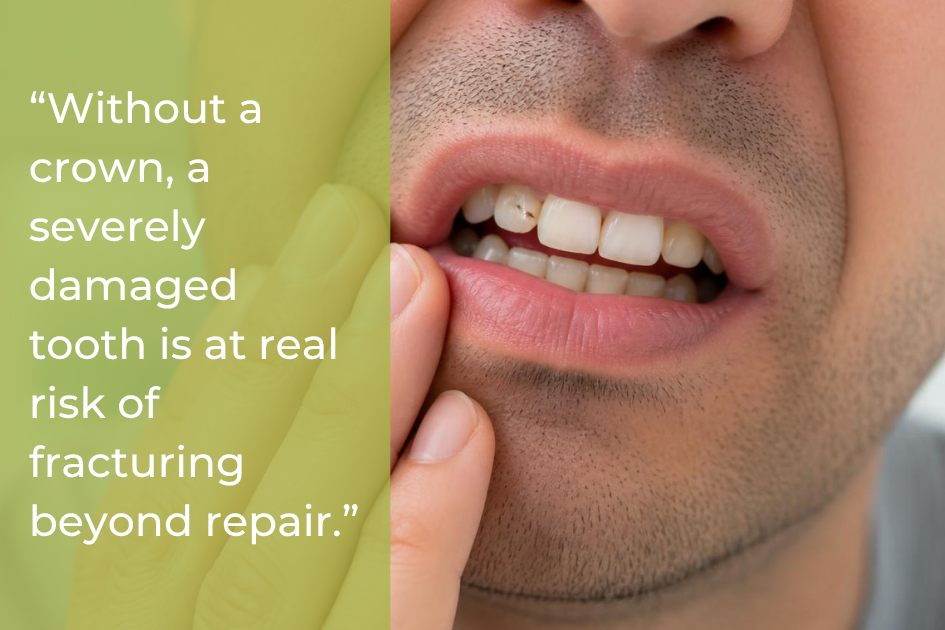
When a tooth is cracked, broken, or so decayed that a filling cannot adequately restore it, a crown is usually the best option. It wraps around the entire tooth, holding it together and preventing the crack from spreading further. Without a crown, a severely damaged tooth is at real risk of fracturing beyond repair.
After a Root Canal
Teeth that have undergone root canal treatment often become more brittle over time because they are no longer receiving nourishment from the pulp. A crown placed over the treated tooth protects it from fracturing under normal chewing forces and restores its full function. In most cases, a crown after a root canal is not optional but necessary for the tooth to last.
Worn Down or Misshapen Teeth
Teeth that have worn down due to grinding, acid erosion, or other factors can be rebuilt with crowns to restore proper bite alignment and appearance. Crowns are also used for teeth that are naturally misshapen or significantly discolored in cases where veneers are not a suitable fit.
When Is a Dental Bridge the Right Choice
One or More Missing Teeth
If you are missing a tooth and the surrounding teeth are healthy enough to serve as anchors, a bridge is a strong and time-tested solution. Beyond aesthetics, replacing a missing tooth matters for your overall oral health. When a tooth is lost, surrounding teeth can drift into the gap over time, affecting your bite and making certain areas harder to clean.
When Dental Implants Are Not an Option
Dental implants are widely considered the gold standard for replacing missing teeth, but they are not right for everyone. Patients with insufficient bone density, certain systemic health conditions, or budget constraints may find that a bridge is the more practical path. Bridges are also completed faster than implants, which involve a surgical procedure and a healing period of several months before the final restoration is placed.
Restoring Bite Function and Smile Appearance
A well-placed bridge restores your ability to chew properly, supports the surrounding teeth, and maintains the natural contours of your face. It also fills the visible gap in your smile, giving you back the confidence to speak and smile without hesitation.
Dental Bridges vs. Dental Implants: Is There a Better Option

Why Some Patients Choose Implants Over Bridges
Implants have a longer lifespan than bridges, often lasting decades with proper care. They also preserve the jawbone by stimulating it the way a natural tooth root would, which bridges cannot do. Another advantage is that implants do not require any alteration of adjacent healthy teeth, whereas a traditional bridge requires those teeth to be permanently shaped to support crowns. For patients who have healthy neighboring teeth and the bone structure to support an implant, it is often the preferred long-term investment.
When a Bridge Still Makes More Sense
A bridge is a practical and effective choice when implants are not possible, when multiple adjacent teeth are missing, and a bridge can span the gap efficiently, or when a faster and less invasive solution is needed. It is also worth noting that bridges are typically less costly upfront than implants, which can make a meaningful difference for patients working within a specific budget.
What to Expect During Your Restoration at Park Family Dental
Your Consultation and Treatment Planning
Your journey begins with a thorough examination, including digital radiography, to assess the health of your teeth, gums, and bone. Dr. Ardita Ormeni will discuss your options, walk you through the differences between crown and bridge materials, and help you land on a treatment plan that fits both your clinical needs and your goals.
Preparing the Tooth and Taking Impressions
Once your treatment plan is confirmed, the affected tooth or abutment teeth are carefully prepared. For a crown, this means reshaping the tooth so the cap fits securely. For a bridge, the abutment teeth on either side of the gap are shaped to accommodate their supporting crowns. Digital impressions are then taken to capture precise measurements, ensuring your final restoration fits accurately and comfortably.
Placing Your Final Crown or Bridge
When your custom restoration is ready, you return for the final placement appointment. Your dentist checks the fit and appearance carefully, makes any minor adjustments needed for a natural bite, and cements the crown or bridge into place. You leave with a fully restored smile and clear aftercare instructions to keep your new restoration in great shape.
How Long Do Dental Crowns and Bridges Last
Both crowns and bridges are built to last, but how long they hold up depends largely on how well you care for them. Brush and floss daily, clean under your bridge with a floss threader or water flosser, avoid biting into hard foods like ice or hard candy, and attend your regular six-month checkups. If you grind your teeth at night, a custom mouthguard is one of the best investments you can make to protect your restorations and your natural teeth alike.
Why Cedar Park Patients Choose Park Family Dental for Crowns and Bridges
Park Family Dental combines advanced digital technology with genuinely personalized care. Digital radiography allows for precise treatment planning, and digital impressions replace the discomfort of traditional molds with a faster, more accurate alternative. Patients have a say in their material selection, choosing between porcelain, zirconia, and other options based on their lifestyle and aesthetic preferences. Dr. Ardita Ormeni takes the time to explain every step of the process, ensuring you feel informed and comfortable from your first visit through your final placement.
Ready to Restore Your Smile in Cedar Park
Whether you need a crown to protect a damaged tooth or a bridge to fill a gap that has been affecting your confidence and your bite, Park Family Dental is here to help. Schedule your consultation today and take the first step toward a stronger, healthier smile.